Conclusion of the Congress "The Franciscans in Hispanic America"
The Legacy of the Twelve Apostles of Mexico
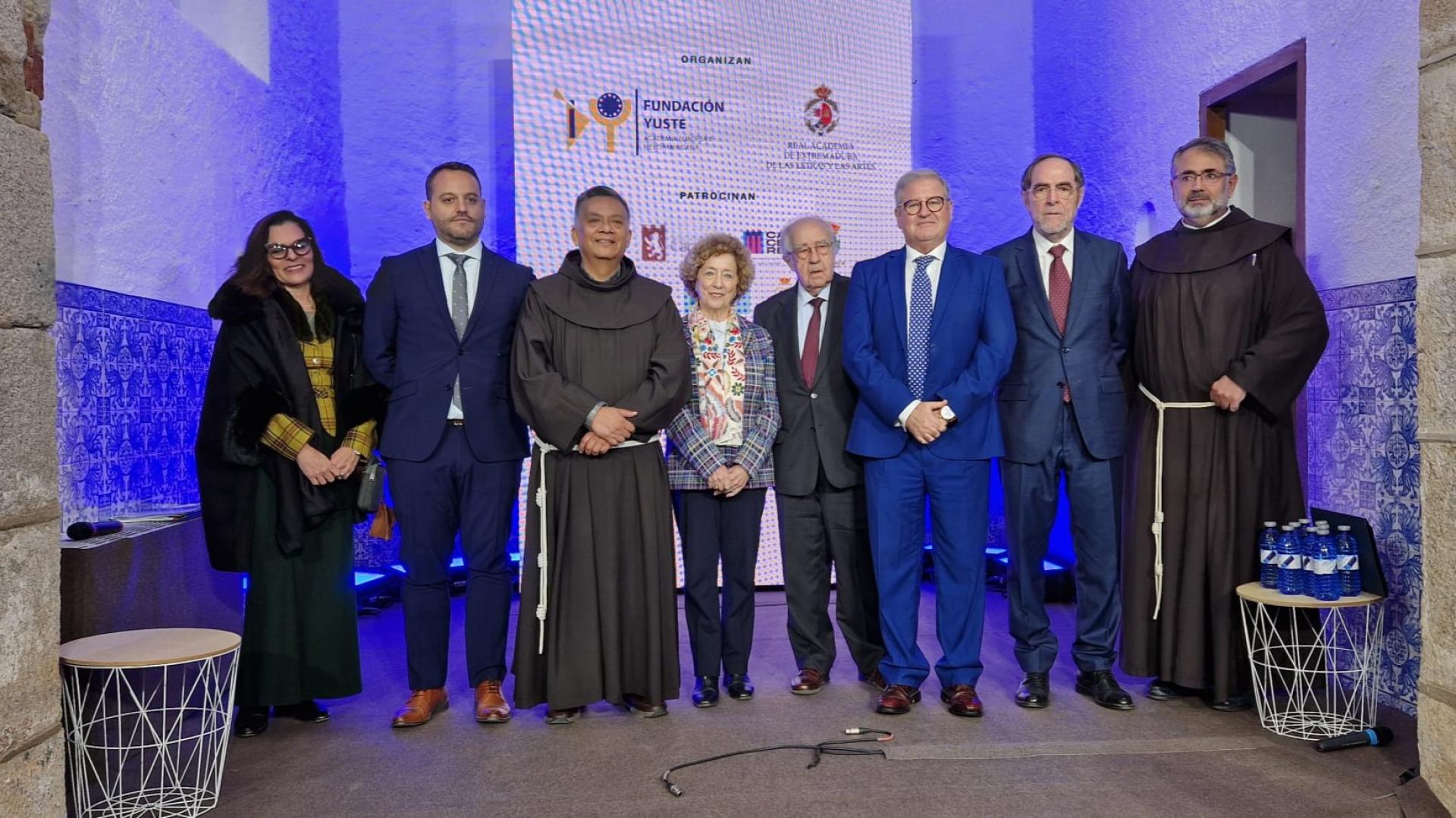
29 October 2024Academics, experts and specialists from Spain, Italy and Mexico met for four days in a scientific and academic congress with the aim of interpreting and discovering the traces of the legacy of the so-called "Twelve Apostles of Mexico" in today's society. These intellectuals, brought together by the European and Ibero-American Academy of Yuste Foundation and the Royal Extremaduran Academy of Letters and Arts, sought to highlight, through their presentations and communications, the humanistic, social, political, cultural and religious value of the twelve Franciscan friars who in 1524 traveled from the Extremaduran friary of Belvís de Monroy to Mexico, going down in history as the prototype of the best Spanish legacy left in America.
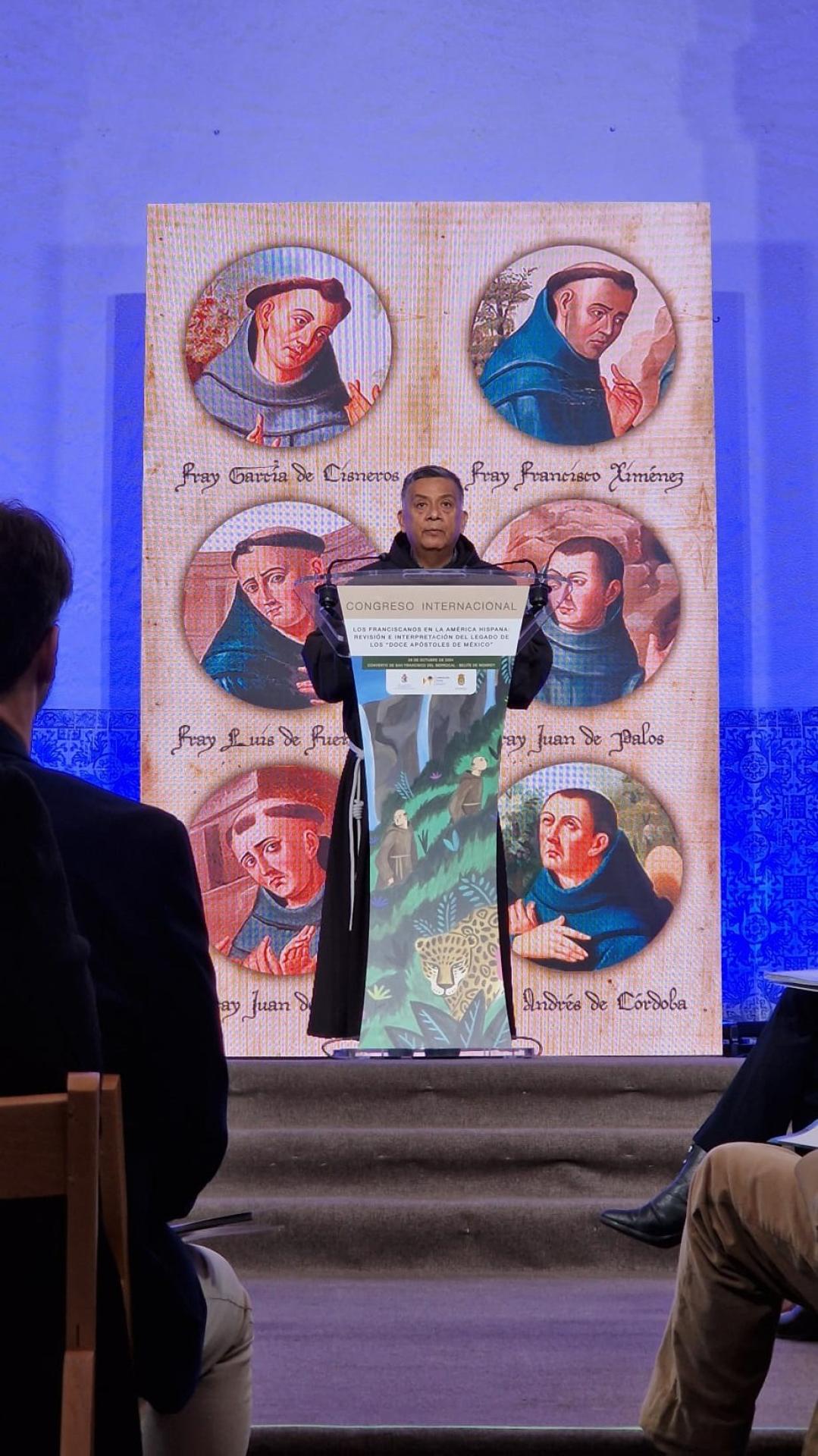
This Congress, which was attended by more than three hundred and fifty people, was held in Guadalupe, Cáceres and Belvís de Monroy, with the aim of commemorating the date on which twelve friars, barefoot and raising the flag of poverty, arrived in "New Spain" with a serene gaze and freedom of thought, understanding history as a process of advancement and progress. Amongst the speakers was Br. Ignacio Ceja Jiménez, Vicar General of the OFM.
At the closing ceremony on the 26th October 2024, held at the friary of St Francis of Berrocal in Belvís de Monroy, the Mayor of Belvís, Mr. Fernando Sánchez, spoke, expressing his hope that the friary will become a vital space to host activities that serve to unite the two sides of the Atlantic.
For the Director of the Yuste Foundation, Juan Carlos Moreno, the celebration of this congress has helped to make public the role played by Spain in America “with its mistakes and outrages, but also with its successes, including that of being a bearer of the evangelical message”. In this sense, he referred to the work of the Franciscans as protectors of indigenous peoples and their rights against the abuses of governments.
The director of the Royal Academy of Letters and Sciences, María del Mar Lozano, for her part, expressed satisfaction with the extraordinary response to the conference and the content presented, which will be collected in a book to be published soon.
The Secretary General of Culture of the Government of Extremadura, Francisco José Palomino, thanked the organizing institutions for holding this congress and stated that the friary will continue to live on.
During the conference, the different figures who in 1986 brought the twelve Franciscan friars who abandoned the friary of Belvís de Monroy out of anonymity were remembered, such as the first archbishop of Extremadura, Antonio Montero, and the promoter of the reform of the friary, the former President of the Junta of Extremadura, Juan Carlos Rodríguez Ibarra.
During the conference, the role of religious men as cultural mediators and the work of the Franciscan missions as centres of evangelization and meeting points between European colonizers and Mesoamerican indigenous communities were highlighted. The interest of the Franciscans in the political and social events of the viceroyalty of New Spain was also revealed through the analysis of the correspondence between the Spanish Crown and “the Twelve”. Furthermore, reference was made to Hernán Cortés’ and his preference for the Franciscan Order to understand society in the Mexican territory, also highlighting the humanizing projection of the religious obtaining a greater rapprochement, protection and integration of the indigenous populations subjected to abuse and extortion by the rulers.
The congress served to update the latest research on the importance of Franciscanism in Extremadura in the second half of the sixteenth century, since many of the first Franciscans in Mexico were from this region and transferred their fundamental characteristics to America: evangelical poverty and, from 1492, an evangelizing passion that they already manifested both in the newly conquered Granada, and in Extremadura, whose population was going through an unfavourable situation.
Edited by José Julián Barriga Bravo, Esperanza Rayo Fernández, Nuria Verdiguier Cerón