Reading the Canticle of the Creatures in over 30 languages
San Damiano, a place of praise and meeting of cultures
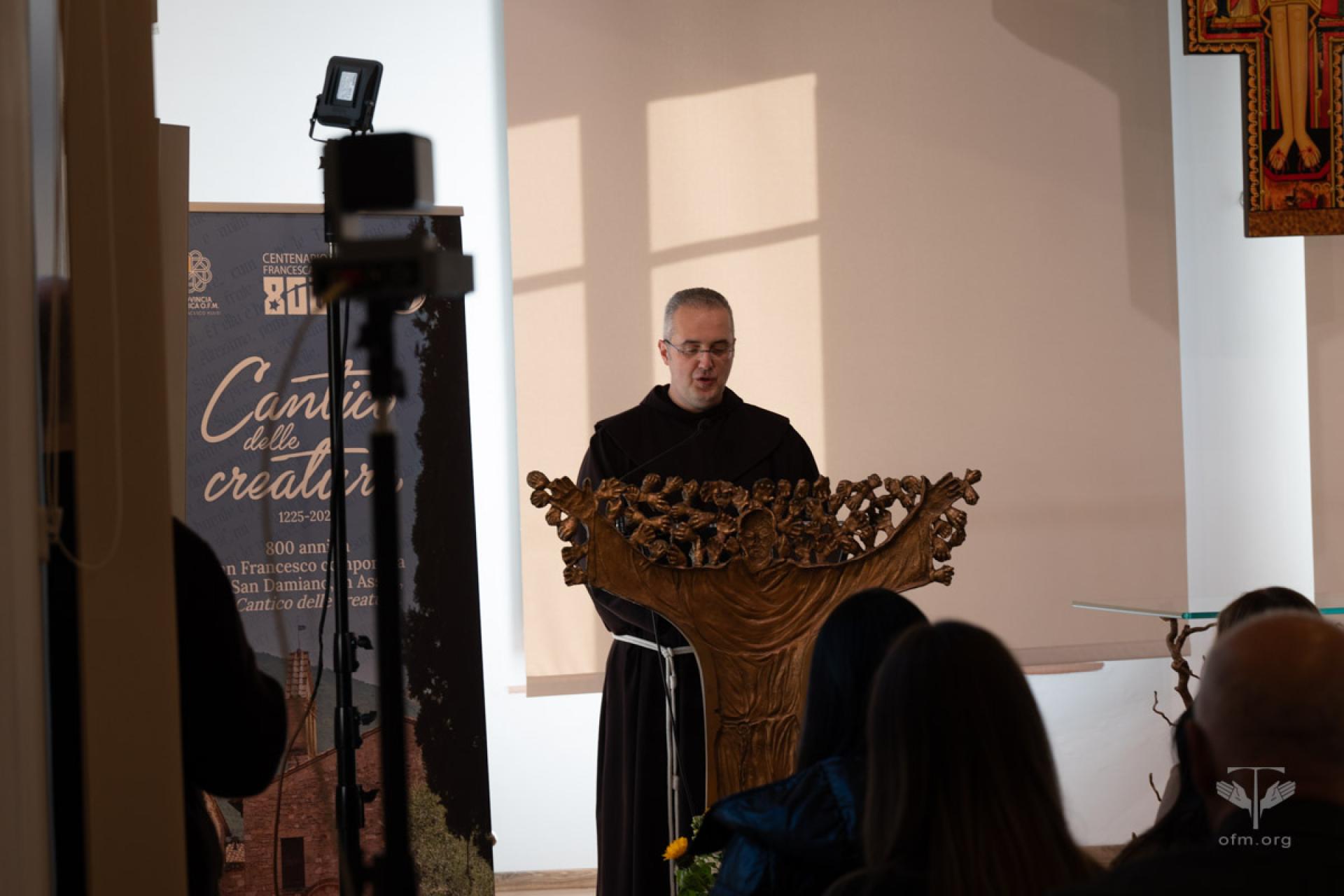
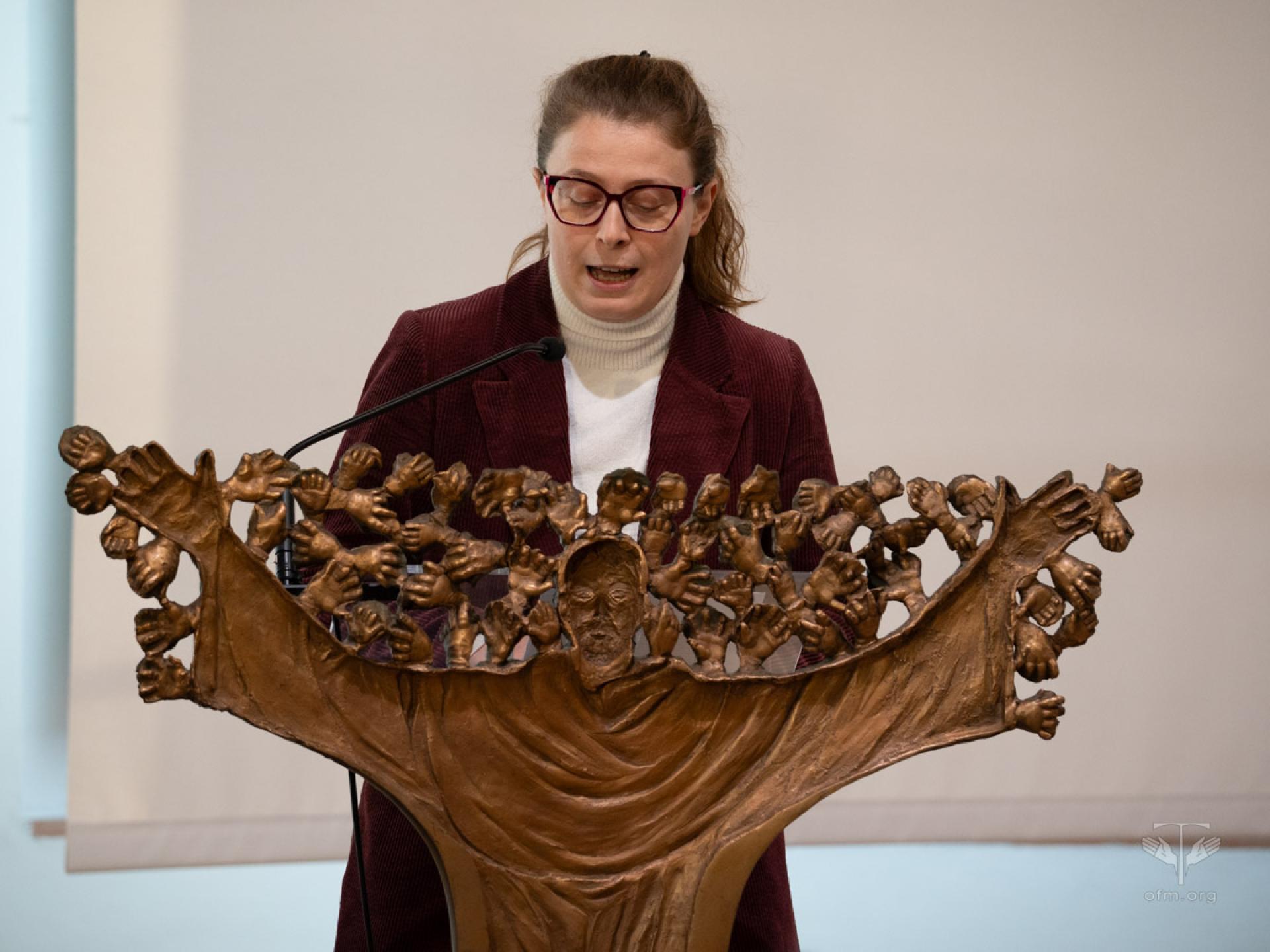
27 February 2025On 26 February, at the Sanctuary of San Damiano in Assisi, the “Francis between the Lines” initiative was officially launched, as part of the celebrations of the Centenary of the Canticle of the Creatures. During the event, hosted by journalist Valentina Antonelli of TGR RAI Umbria, the Canticle was read in over 30 different languages by students from all over the world, from two universities in Perugia and by several Religious of the Franciscan Family.
Br. Mauro Botti, Guardian of San Damiano, opened the event by recalling how Francis, in November 1224, arrived at San Damiano tormented by illness. He brought his audience back to a night of intense suffering for Francis in which he did not ask to be freed from the pain, but prayed for the strength to patiently bear it. It was precisely in this context of profound suffering that the inspiration for the Canticle was born.
“Here, with this reading of Francis between the lines, we will embark on a journey to discover Francis the Troubadour... Today in concert with the world, we are called to give harmony to Francis' words. We are the “troubadours of the Lord,” said Brother Mauro, reflecting on the figure of God's little minstrel. He borrowed this image from the writer G.K. Chesterton who described Francis as a man who saw the world “upside down,” offering humanity a unique perspective on reality.
Professor Roberto Rettori of the University of Perugia began his remarks by calling the gathering a meeting of cultures. “This is a special moment in which 30 languages help form one and the same culture. It is an extraordinary moment, because it is, in fact, a uniting of cultures, of different languages which represent different cultures and even different religions.” He also highlighted how the Canticle is an extraordinary song of praise for the gift of life, offering words that should overcoming every cultural and religious barrier.
Professor Valentina Carbonara of the University for Foreigners of Perugia, compared the gathering to Pentecost, a time when the Apostles received the Holy Spirit and were able to communicate with people of different languages and cultures. This multilingual gathering represented a moment of profound union between different cultures, where a common language emerged: that of human experience and gratitude for the beauty of creation.