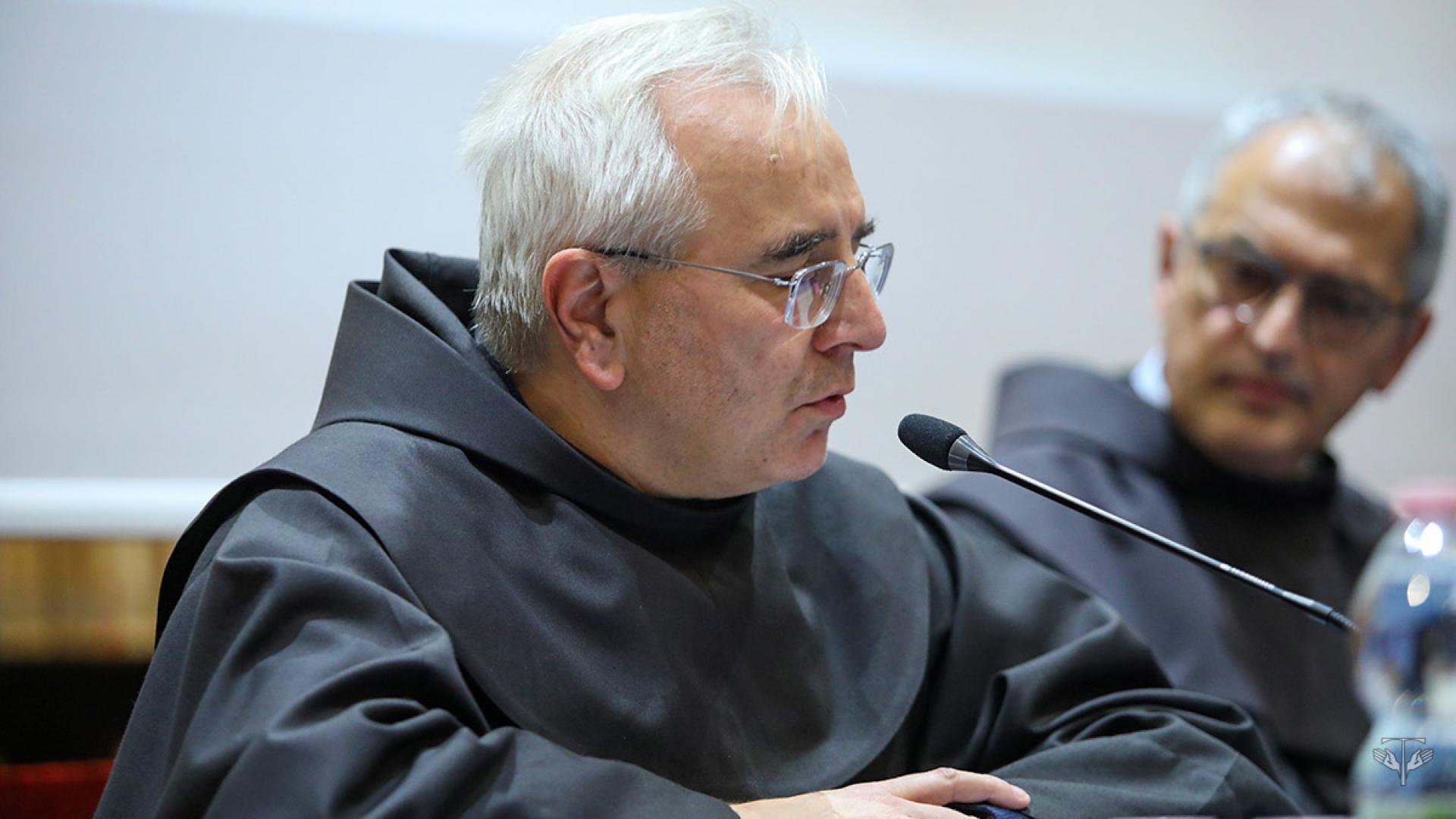
Venice, beginning of the new Academic Year of the Institute of Ecumenical Studies
St Francis of Assisi, a man of dialogue and hope
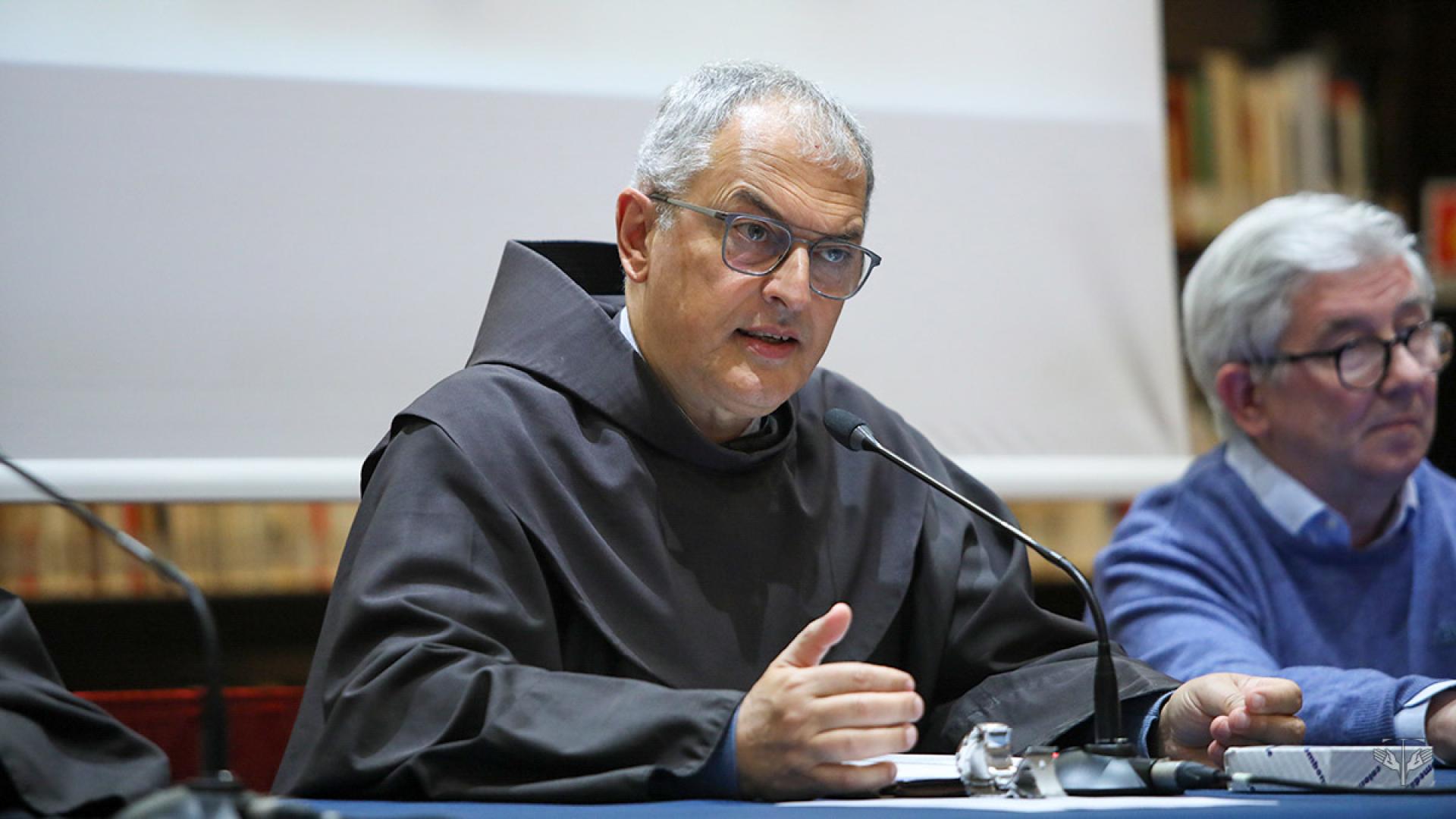
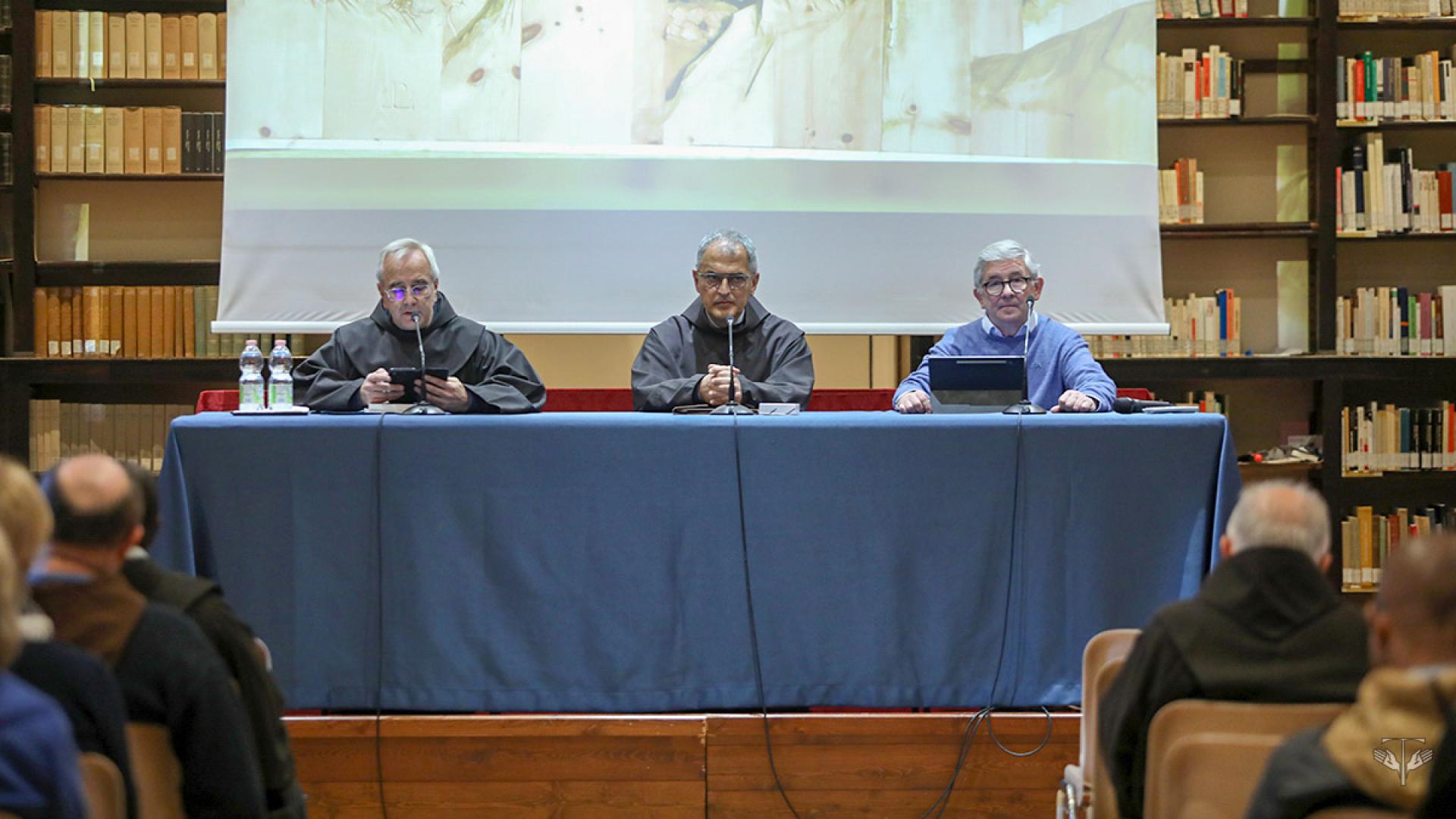
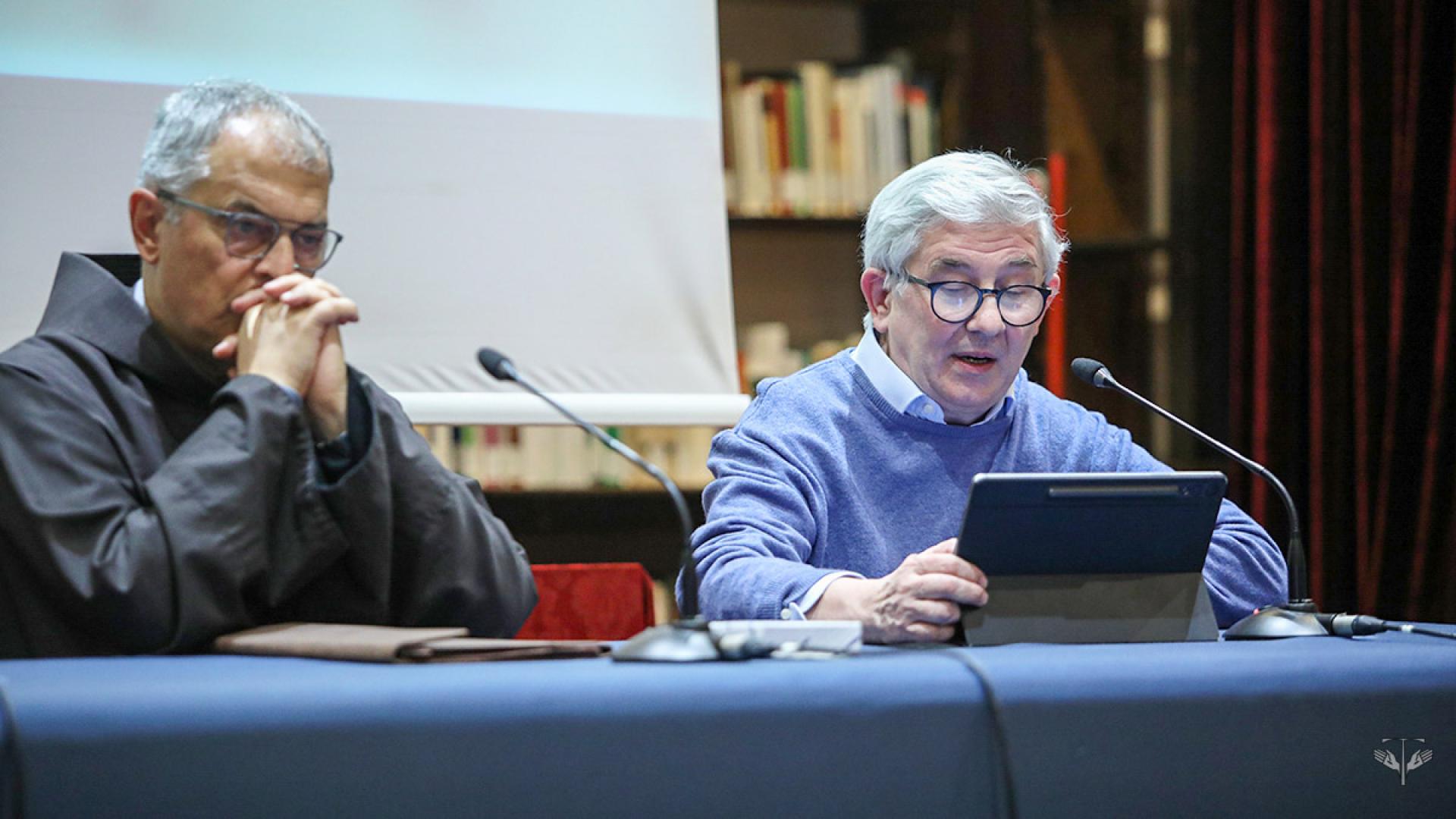
10 November 2025The occasion of the eighth centenary of the death of St Francis of Assisi inspired the theme of the Inaugural Address to the new academic year 2025-2026 Francis of Assisi (1226-2026), a man of dialogue and hope, held with great incisiveness by the Minister General of the Order of Friars Minor, Br. Massimo Fusarelli, who honoured us with his presence.
Many themes were addressed by the speaker, which helped us to rediscover the prophetic timeliness of the Poverello - the Poor Man - of Assisi as a man of dialogue and hope, in a time marked by divisions that are still open, by conflicts that tear humanity apart and by an unprecedented ecological crisis.
First of all, the starting point, the founding moment of the Franciscan vocation: St Francis' carnal, concrete, upsetting encounter with the leper and his coexistence with those excluded. It constitutes the paradigm of every authentic relationship and every authentic dialogue because it is the acceptance of letting oneself be transformed by the encounter with the other, especially with the excluded.
The Minister General reminded us that in the spirituality of Francis of Assisi, dialogue is first and foremost a Trinitarian action: the Father who in the perfect Trinity and in simple Unity lives, reigns and is glorified (FF 233), that is, the Father who gives himself totally in the Son, and the Son who responds in the love of the Spirit. If God himself is dialogue, then dialogue is not a simple pastoral strategy or a method of communication, but participation in the very life of God. Ecumenism, from this perspective, thus becomes an expression of the Trinitarian action that the Church performs.
He also reiterated that poverty is the condition for the possibility of authentic dialogue. St Francis embodied the evangelical logic of minority and poverty as a style of dialogue: the poverty of the Christian minor is that for which he lives stripped of any claim to domination, even with regard to the truth, and dialogues as a beggar for it, seeing it not as a stepmother who kills but as a mother who gives life.
St Francis's choice to live inter minores, among the last, is substantially an ecclesiological and eschatological choice. To become minor means to renounce any form of domination, it means to assume the point of view of the last as a hermeneutic of reality. This perspective is deeply imbued with hope because it inverts the logic of the world: it is not the powerful who make history, but the little ones, the poor, the excluded. The Kingdom of God is proclaimed in the peripheries of the world.
Br. Massimo Fusarelli concluded by indicating some promising paths for an ecumenism inspired by the saint of Assisi: minority as an ecumenical method, against claims of superiority and rigid identity defenses that have weighed down the dialogue between the Churches; universal fraternity as a horizon, as an anthropological and ethical basis for ecumenical and interreligious dialogue; the primacy of the concrete gesture, beyond words, as an eloquent way of common witness in charity to walk towards communion; common prayer as a privileged moment for the various Christian Churches that anticipates that full unity that we still seek in history; theological formation and innovation, capable of keeping alive the paradosis of the kerygma.
Eight centuries after his passing away, St Francis of Assisi continues to challenge the Church and the world with his prophecy of fraternity, dialogue, and hope. His life is not an example to be admired with nostalgia, but a call to be welcomed in the present.
Source: www.isevenezia.it